JST, Molex, or TE? Picking a Compatible Connector Alternative
When a BOM specifies a JST, Molex, or TE part, a compatible alternative is rarely a simple part number swap. Pitch, housing, locking, terminals, and certification all have to line up first. This guide compares the three brands and gives a verification sequence you can hand to any supplier.
Why Buyers Look for JST, Molex, and TE Alternatives
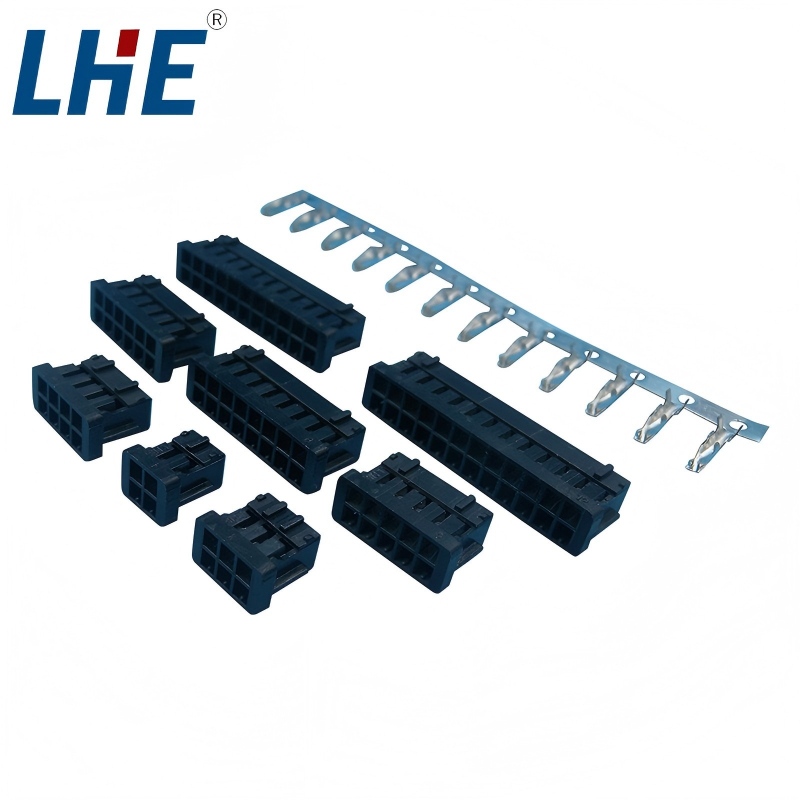
Moving off a brand-name part number is a procurement decision driven by three pressures.
Cost pressure on high-volume lines
A finished product can carry 20 connectors or more. A few cents per position across thousands of units becomes a real line item. Compatible connectors from manufacturers with their own tooling typically price below the original brand.
Lead time and supply security
Brand parts move through distribution with long replenishment cycles. When a line stops waiting on a 16-pin housing, the wait costs more than the connector. A manufacturer that keeps common series in stock can quote shorter lead times, and a second source protects you if a series goes end-of-life.
A second source, not a substitution
The goal is not an unknown part at a lower price. It is a functionally identical component that mates with your existing counterpart, carries the same loads, and clears the same certifications.
JST vs Molex vs TE: Pitch and Rating Reference Table
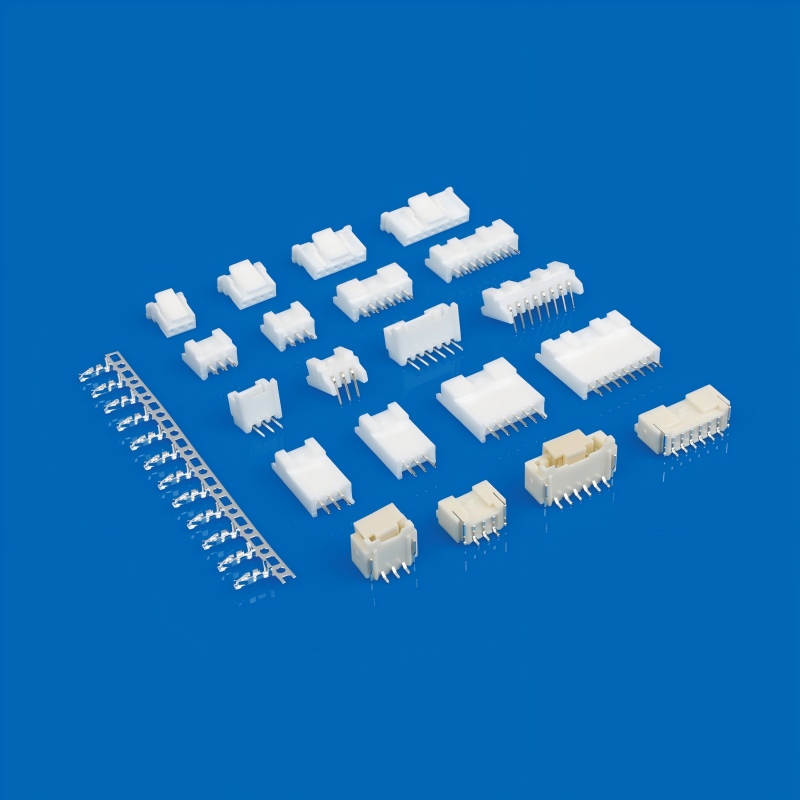
Pitch is the distance between pin centers, and it is the specification that separates these families. The table below lists common series from the three brands with typical values from public datasheets.
| Series | Pitch | Typical current rating | Typical voltage | Common use |
| JST XH | 2.50 mm | 2A per circuit | 250V | Battery packs, small appliance PCBs |
| JST PH | 2.00 mm | 2A per circuit | 100V | Compact boards, LED lighting |
| JST SM | 2.50 mm | 3A per circuit | 250V | Power supplies, panel wiring |
| Molex Mini-Fit Jr (5556 / 5557 / 5559) | 4.20 mm | Up to 13A per circuit | 600V | Power supplies, industrial equipment |
| Molex Micro-Fit 3.0 | 3.00 mm | 5A per circuit | 350V | Compact power interconnects |
| TE Mini Universal MATE-N-LOK | 4.14 mm | 10A per circuit | 600V | Appliances, industrial controls |
| TE Universal MATE-N-LOK | 6.35 mm | 19A per circuit | 600V | High-current AC power connections |
| TE AMP Economy Power (EP) | 2.50 mm | 5A per circuit | 250V | Appliances, white goods |
Ratings are typical per circuit and depend on wire size and ambient temperature; confirm against the specific datasheet. The table also shows why swapping families by eye fails: a JST PH at 2.00 mm and a JST XH at 2.50 mm look alike in photos and differ completely in the hand. Pitch is the gate; nothing else matters until it matches.
What “Compatible” Really Means (and What It Does Not)
A compatible alternative mates with the original counterpart and fits the original footprint. Four things must match at once.
Pin pitch
Pitch must match the tolerance of the original drawing, not “close enough.” A 0.5 mm error across 10 positions adds up to bent pins and intermittent contact under vibration. If your existing part is a 2.50 mm JST XH or a 4.20 mm Mini-Fit Jr, the alternative must match that exact pitch. Measure with calipers, not photos.
Housing outline and locking structure
Housing length, width, and height must clear your PCB and enclosure. Just as important is the latch. Mini-Fit Jr housings use a locking feature that prevents accidental unmating; JST XH uses a cantilever latch on top. A replacement must reproduce the same latch position and pull direction.
Terminal and crimp specifications
Terminals are where compatibility failures show up in the field. The contact must use the same pin diameter and barrel geometry so it crimps onto your existing wire range, locks into the housing with the correct retention, and carries rated current without overheating on the right contact material and plating. For a connection carrying 10A, a terminal rated for signal current is a risk, not a saving.
Keying and polarization
Many series use keying ribs, polarization slots, or color coding to prevent wrong insertion. A compatible part must reproduce these in the same positions, especially with identical connectors side by side. If the keying differs, operators can plug into the wrong receptacle, and no electrical test catches it until field failure.
How to Verify a Compatible Alternative Before You Buy
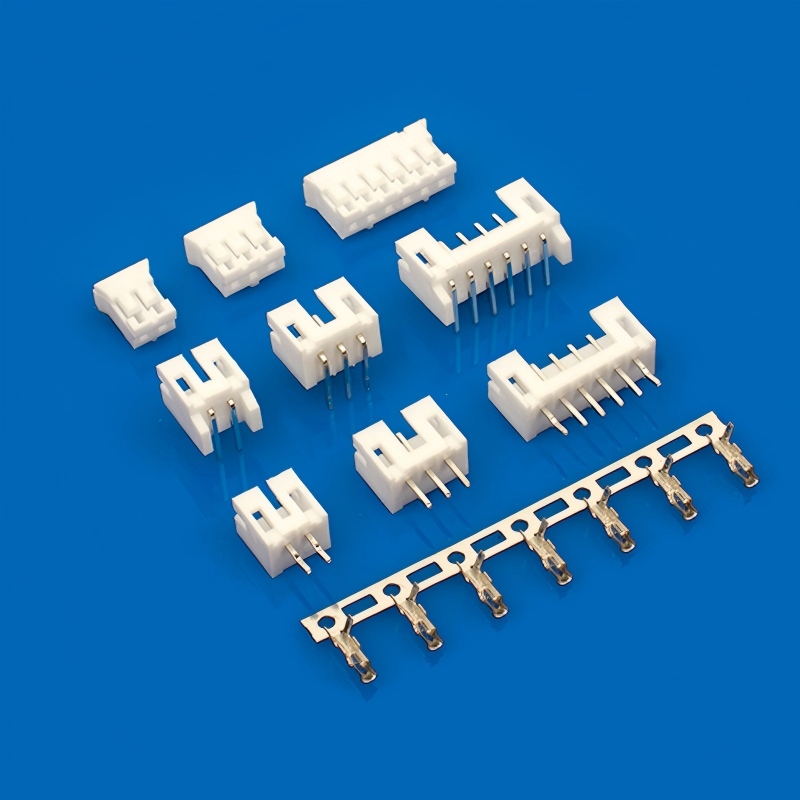
Run this sequence on any sample before approving it for production.
- Measure pitch with calipers across the full housing length, not only between two adjacent pins, to avoid cumulative tolerance errors.
- Count total pin positions and confirm keying ribs and polarization slots match the original connector precisely.
- Compare housing outer dimensions and latch structure, including latch position, locking direction and release travel.
- Confirm the terminal accepts your specified wire gauge range and matches the mating pin diameter of the original part.
- Check current and voltage ratings against your worst-case working load, including transient inrush current.
- Verify certification documents and continuous operating temperature range for the housing and contact material.
If a supplier cannot answer all six points in writing, treat that as a red flag.
UL, derating, and operating temperature
Compatibility is geometry; safety is certification and ratings. First, check UL status: a UL recognized component carries a verifiable file number, and your end product certification relies on it. Second, respect derating: ratings assume free airflow, and a sealed enclosure at 60°C ambient reduces what the connector can carry. Third, confirm the temperature range: standard nylon housings are rated for roughly -25 to 105°C, so check the material grade if your product runs outside that.
Examples of Compatible Alternatives to Compare
The series below show the profile to look for in a replacement.
- The A3963 3.96mm connector(A3963-DWV03) is a power-grade wire-to-board series: Nylon 66 housing, brass tin-plated contacts, 10A and 250V, 22-16 AWG, UL recognized under E364711, rated for -25 to 105°C. It serves as a practical JST connector alternative when the application needs sufficient current headroom.
- The 16-pin JST connector(A2001-H16) is a 2.00 mm, 16-position header rated 2A and 100V for 24-32 AWG wire. It is built for high-pin-count JST-style layouts widely used in compact control boards.
- The Molex 5557 compatible connector is a 4.20 mm Mini-Fit Jr style receptacle line, designed for power and industrial applications where a Molex compatible connector must sustain full rated current inside a securely locked housing.
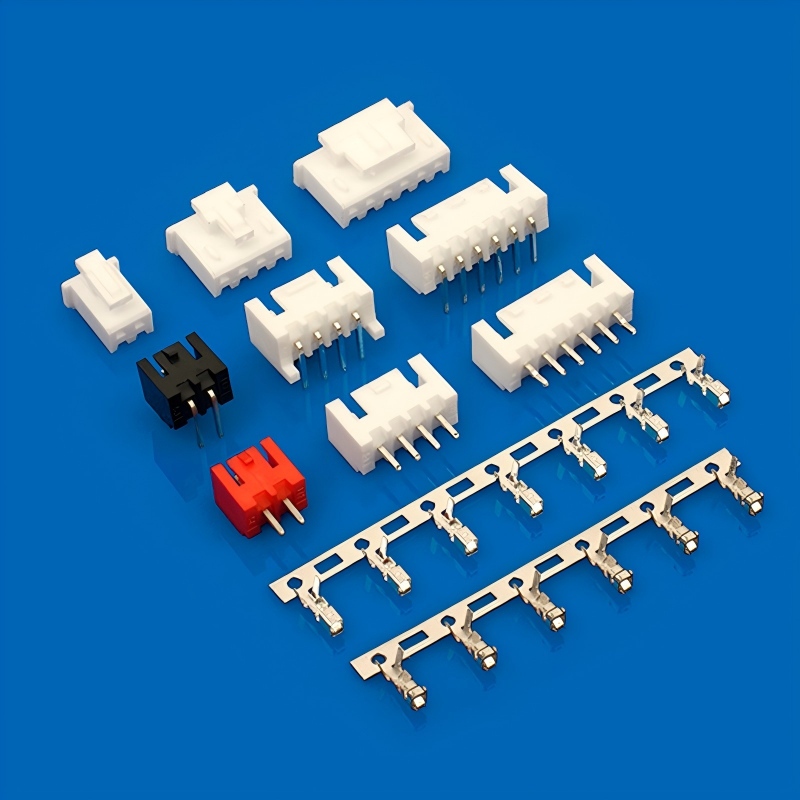
- The TE compatible connector range covers TE-style housings and crimp terminals, customized for household appliance and industrial control wiring projects.
- Browse more connector alternatives and specifications on our connector product category page.
For OEM and ODM programs, send the original sample or drawing; the engineering team matches it, validates the dimensions, and quotes the alternative.
FAQ
Can I use a JST connector in place of a Molex Mini-Fit Jr?Not as a direct swap. JST XH and PH run at 2.50 mm and 2.00 mm pitch with 2A ratings, while Mini-Fit Jr is 4.20 mm and carries up to 13A per circuit. The pitch, housing, and current capacity all differ, so they are not interchangeable.
What pitch is a Molex Mini-Fit Jr connector?Mini-Fit Jr is 4.20 mm pitch. The 5557 housing is the receptacle side and pairs with 5556 and 5559 housings and 5558 terminals. Any compatible replacement must match that pitch and the locking structure.
How do I measure the pin pitch of a connector I already have?Measure from the center of the first pin to the center of the last pin with calipers and divide by positions minus one. One pair of adjacent pins is not enough; molding tolerances can hide pitch differences across a long housing.
Are compatible connectors as safe as the original brand parts?They can be, when geometry, material, and ratings match and the part carries verifiable certification. The risk comes from unverified parts that match visually but fail on terminal retention or current capacity, so use the six-point verification sequence above.
Does a compatible connector need UL certification?If your end product is UL listed, yes. A UL recognized file number, such as E364711 on the A3963 series, gives your certification engineer a traceable path; an uncertified part forces you to test the whole assembly yourself.
What is the difference between JST XH, PH, and SM?Pitch and rating. XH is 2.50 mm at 2A, PH is 2.00 mm at 2A, and SM is 2.50 mm at 3A with a sturdier housing. They are not interchangeable, so you need the exact series number from your BOM, not just the brand.
Request Samples and Get a Quote
If a JST, Molex, or TE part number is on your BOM, send it to a shortlisted supplier with a sample for comparison. A qualified supplier confirms pitch, housing, and terminal specs, verifies ratings against your application, and sends samples for fit testing. Ask about stock levels and OEM and ODM support, then compare quotes before committing. Contact our team to request samples and pricing.