The Ultimate Guide to Circuit Board Connectors: Types, Functions, and Applications
In today’s era of compact and high-performance electronics, circuit board connectors play a vital role in ensuring reliable electrical and mechanical connections within a system. From smartphones and automotive electronics to industrial automation and medical devices, these connectors enable efficient power and signal transmission between various electronic components and printed circuit boards (PCBs).
At LHE, we design and manufacture a complete range of circuit board connectors engineered to meet the highest standards of precision, durability, and compliance. Whether you’re building a consumer gadget or an industrial control system, understanding how these connectors function — and how to choose the right type — is key to achieving both design flexibility and product reliability.

What Are Circuit Board Connectors?
Circuit board connectors are electro-mechanical devices that create detachable interfaces between different parts of an electronic assembly — typically connecting one or more wires, cables, or boards to a PCB. They enable fast assembly, easy maintenance, and high reliability in both low- and high-voltage applications.
Unlike soldered joints, which create permanent connections, connectors provide flexibility, allowing engineers to replace, test, or upgrade specific components without redesigning the entire circuit. These connectors are available in various shapes, pin counts, and current ratings, designed to support both signal transmission and power distribution.
Key Functions of Circuit Board Connectors
- Electrical Continuity: Establish a stable conductive path between circuits or components.
- Mechanical Retention: Securely hold cables and boards together, even under vibration or mechanical stress.
- Modular Design Flexibility: Enable modular assembly, making it easy to repair or upgrade systems.
- Ease of Maintenance: Allow quick disconnection and reconnection during troubleshooting or servicing.
- Safety and Compliance: Ensure that systems meet global safety and environmental standards such as UL, RoHS, and REACH.

Common Types of Circuit Board Connectors
Circuit board connectors come in many types and configurations, depending on application requirements. Below are the most widely used categories:
Wire-to-Board Connectors
These connectors link individual wires or cable harnesses directly to the PCB. They’re used in power supplies, consumer electronics, and automotive systems.
LHE’s wire-to-board connectors are available in multiple pitch sizes (1.25mm to 5.08mm), ensuring compatibility with high- and low-current designs.
Board-to-Board Connectors
Used to connect two or more PCBs within the same device, these connectors support vertical, horizontal, or mezzanine stacking arrangements. They provide space-saving interconnections ideal for compact electronics such as communication devices, IoT modules, and embedded systems.
Wire-to-Wire Connectors
These connectors link two cables together within an electronic system. They are especially useful when PCBs are not directly connected but still need power or signal continuity.
Terminal Blocks
Used for power distribution and wiring organisation, terminal blocks allow secure and reusable wire connections. They are essential in control panels, HVAC systems, and industrial automation.
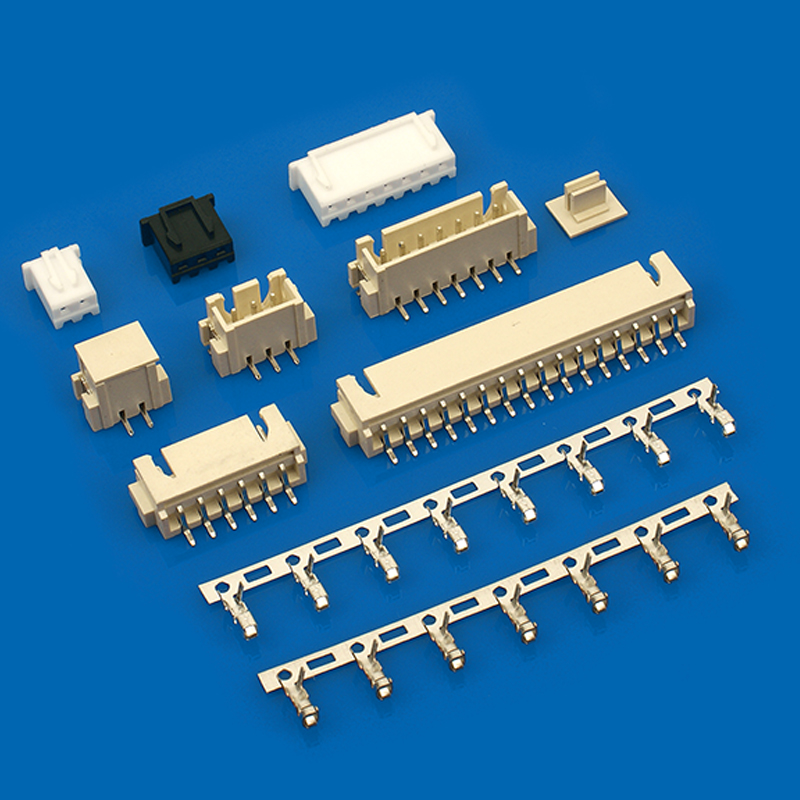
Main Components of a Circuit Board Connector
A well-engineered connector typically consists of the following parts:
- Terminals: The conductive elements that ensure electrical continuity. Often made from copper alloys and plated with gold or tin for corrosion resistance.
- Housing: Usually a thermoplastic casing that provides mechanical strength and electrical insulation between contacts.
- Locking Mechanism: Ensures firm engagement between mating parts and prevents accidental disconnection.
- Polarization and Keying: Design features that prevent incorrect mating and ensure proper alignment.
- Mounting Type: Either through-hole (THT) or surface-mount (SMT), depending on PCB layout and manufacturing process.
How to Choose the Right Circuit Board Connector?
Selecting the right connector requires balancing electrical, mechanical, and environmental factors.
Consider the following key aspects:
Pitch and Size
The distance between connector pins affects current capacity and board space usage. Smaller pitches suit compact designs; larger ones support higher currents.
Current and Voltage Ratings: Always match connector specifications to your system’s power requirements.
Number of Pins
Define based on the signal and power line needs.
Material and Plating
Choose corrosion-resistant materials like phosphor bronze with tin or gold plating for better conductivity.
Mounting Orientation
Vertical or right-angle connectors determine wire routing and board stacking configuration.
Environmental Conditions
Consider temperature, vibration, and moisture levels for appropriate housing and seal materials.
Compliance and Safety
Ensure connectors meet UL, CE, RoHS, and REACH certifications for global market acceptance.
At LHE, our engineering team assists customers in choosing connectors that deliver optimal performance, reliability, and cost-efficiency for their unique applications.

Applications of Circuit Board Connectors
Consumer Electronics
Used in smartphones, televisions, laptops, and home appliances for connecting internal modules and ensuring compact yet reliable interconnections.
Automotive Industry
Essential for connecting sensors, control units, and infotainment systems. LHE’s connectors are engineered to withstand vibration, heat, and moisture.
Industrial Automation
Connectors play a vital role in PLCs, robotics, and power distribution equipment, ensuring stable and safe electrical connections in harsh environments.
Telecommunications
High-density connectors support fast signal transmission and data integrity in network devices, routers, and communication systems.
Medical Equipment
Used in diagnostic instruments, imaging devices, and wearable monitors where reliability and precision are critical.
Renewable Energy and Power Systems
Connectors facilitate safe energy transfer in solar inverters, battery packs, and EV charging systems.

Advantages of LHE Circuit Board Connectors
- Reliability and Durability
Each connector is designed to withstand harsh environmental conditions, including vibration, high temperature, and moisture exposure. Our connectors maintain stable electrical performance even after thousands of mating cycles.
- Design Versatility
LHE offers a wide selection of connector types, configurations, and pitch sizes to accommodate diverse applications — from consumer electronics to heavy industrial systems.
- Quality Assurance
Manufactured in ISO 9001-certified facilities, LHE connectors undergo 100% inspection and testing to ensure compliance with international safety and quality standards.
- Compatibility and Customization
We provide compatible replacements for major brands such as JST, Molex, and TE Connectivity, along with customizable connector solutions to meet specific client requirements.
- Global Compliance
All products are RoHS and REACH compliant, ensuring eco-friendly and globally accepted manufacturing practices.
Emerging Trends in Circuit Board Connector Technology
The electronics industry is rapidly evolving, and so are connector technologies.
Some current trends include:
- Miniaturisation: Increasing demand for micro connectors in wearable and IoT devices.
- High-Speed Data Transmission: Connectors optimised for faster communication and reduced signal loss.
- Environmental Sealing: Waterproof and dustproof connectors (IP67/IP68) for outdoor and automotive use.
- Sustainable Materials: Eco-friendly plastics and recyclable metals supporting global sustainability initiatives.
- Automation-Ready Designs: Connectors compatible with robotic assembly lines to increase production efficiency.
At LHE, we continue to innovate connector design and materials to meet the evolving needs of next-generation electronics.
Why Choose LHE for Circuit Board Connectors?
With years of experience in connector design and manufacturing, LHE offers reliable and cost-effective solutions tailored to meet diverse industry requirements. Our connectors combine precision engineering, robust construction, and global compliance, making them the preferred choice for OEMs worldwide.

Our Key Strengths:
Wide connector range: wire-to-board, board-to-board, and wire-to-wire types.
- Advanced production facilities with automated quality control.
- Fast lead times and excellent customer support.
- Custom design services for unique electrical and mechanical requirements.
- By partnering with LHE, you gain a trusted supplier committed to quality, innovation, and long-term reliability.
Conclusion
Circuit board connectors are essential to modern electronic systems, enabling efficient signal and power transfer across countless devices and industries. Selecting the right connector can greatly impact performance, safety, and durability — which is why choosing a trusted manufacturer like LHE makes all the difference.
With our high-quality, globally compliant, and customizable connector solutions, LHE empowers engineers and manufacturers to build smarter, safer, and more reliable electronic products.