Wire-to-Board or Wire-to-Wire? Choosing the Right Connector
The wire-to-board vs wire-to-wire connector choice shapes nearly every control board project. A wire-to-board connector joins a wire harness to a PCB; a wire-to-wire connector joins two harness sections directly. The full answer involves pitch, current rating, board space, and service needs. This guide compares both families, adds board-to-board connectors, and gives a selection path that fits production.
What Are the Three Connector Families?
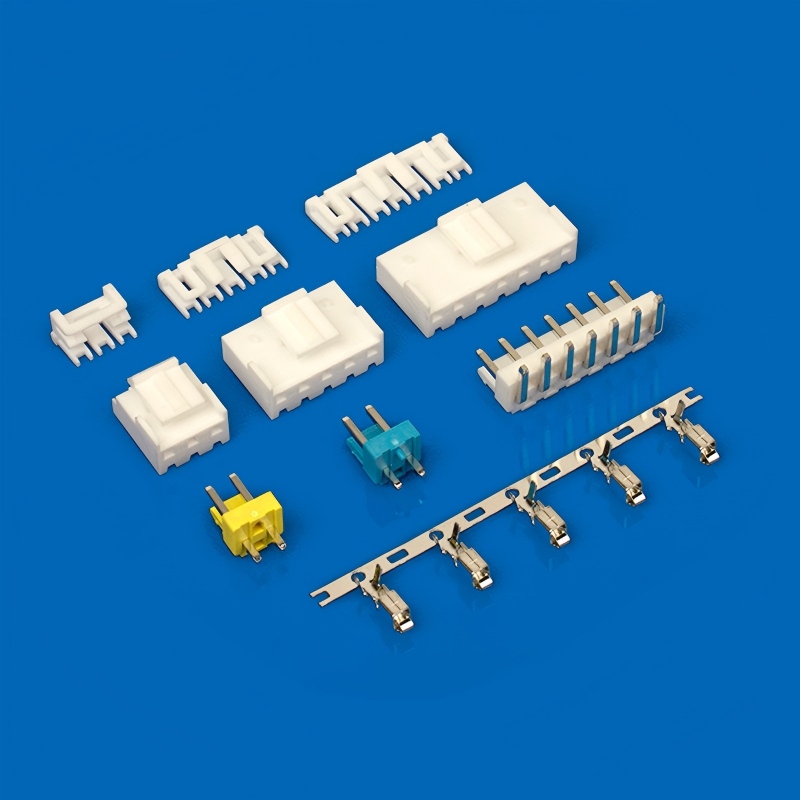 Every connector answers one question: what two things are being joined? The answer sorts connectors into three families.
Wire-to-Board Connectors
A wire-to-board (WTB) connector has two halves with different roles. One half is a receptacle soldered to the PCB, through-hole or surface mount. The other half is a plug crimped onto the end of a cable. When the plug slides in, the cable becomes an extension of the copper trace on the board, which makes WTB the standard way to bring power or signals into the circuit. The A1001-H05 is a good example: a 1.0 mm pitch wire-to-board connector rated at 1 A and 50 V, built for compact boards that need a serviceable cable entry.
Wire-to-Wire Connectors
A wire-to-wire (WTW) connector mates two free cable ends, and neither half is fixed to a board. A male housing on one harness plugs into a female housing on the other, which makes WTW the natural choice for extending a cable run, splitting a harness, or connecting a sensor module that sits away from the control board. The A2005-DWV03 is a 2.0 mm pitch wire-to-wire connector rated at 2 A and 100 V, sized for linking cable sections in appliances and light equipment.
Board-to-Board Connectors
Board-to-board (BTB) connectors skip the cable entirely. Two PCBs mate directly, stacked one above the other or placed edge to edge in the same plane. This family earns its place in dense designs where a cable would waste space and add a failure point, like a stacked pair of boards in a portable device. The 2-pin board-to-board connector covers simple parallel and stacked arrangements.
Wire-to-Board vs Wire-to-Wire: The Core Differences
When you set wire-to-board vs wire-to-wire connector options side by side, three differences decide the outcome: where the joint lives, how it mates, and how easily it opens.
| Characteristic | Wire-to-Board (WTB) | Wire-to-Wire (WTW) |
| What mates | PCB-mounted receptacle with a cable plug | Two free cable connectors |
| Typical pitch | 1.0 to 2.5 mm | 2.0 mm and up |
| Typical current | 1 to 5 A at common pitches | 2 A and up, depending on pitch |
| Locking | Friction or small latch | Latch, often with a positive click |
Ranges are typical for small-signal families and vary by series, so confirm against the part datasheet.
Where the Connection Terminates
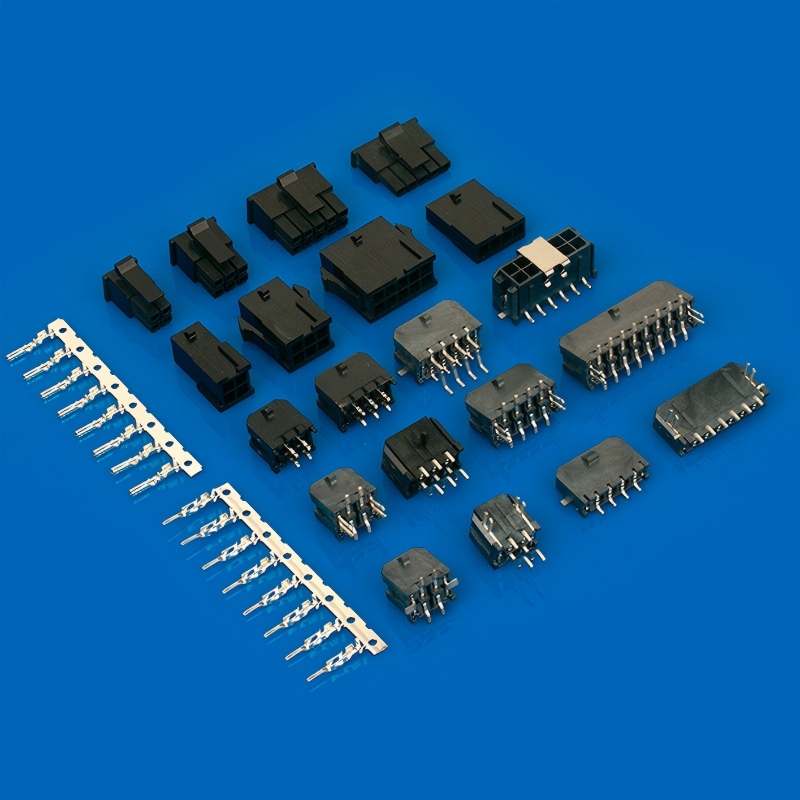 The terminating ends drive the rest. A WTB joint has one fixed anchor, the soldered receptacle, so the cable can be routed and strain-relieved relative to the board. A WTW joint floats mid-harness with no fixed anchor, so it needs its own latch and strain relief, while a board-side joint leans on the solder joint for part of its strength.
How Mating and Locking Differ
WTB plugs usually rely on a friction fit or small latch, since the receptacle is held firmly by the board. WTW housings lock harder, with polarization ribs and an audible click, because the joint floats in free space and sees more handling. If the harness gets pulled or disconnected repeatedly, the WTW latch keeps the joint alive.
Where Each Type Earns Its Place
Appliance Control Boards
Appliances lean on wire-to-board connectors. A washing machine controller takes in mains power, motor leads, door-switch signals, and display connections through WTB joints on one PCB. The A1001’s 1.0 mm pitch fits these dense, double-sided boards, and the plug side keeps field repair simple: pull the plug, swap the board, push it back in.
Automotive Sensors and Harnesses
Wire-to-wire connectors dominate the automotive harness where the joint has to live away from a PCB. Chassis-mounted sensors, door modules, and body splices all use WTW because the connection point sits inside a cable bundle, not on a board. Latching housings and polarization keep the joint from backing out under vibration, so WTW is the first choice for sensor extensions and harness junctions.
Consumer Electronics
Consumer products mix the families. A smart appliance or small power tool uses WTB where the harness meets the main board, WTW where two subassemblies connect through a cable, and a BTB joint where a stacked display sits over the PCB. The choice is rarely one family per product. It is one family per joint.
How to Choose Between Wire-to-Board and Wire-to-Wire
Pitch and Board Space
Start with the board. If the PCB is dense and the pads are tight, fine-pitch WTB in the 1.0 to 1.25 mm range fits where a larger WTW pair would not. If the joint has to live off the board, WTW lets you place it anywhere along the harness, at the cost of a wider pitch and a bigger footprint.
Current and Voltage
Check the load before the pitch. Small WTB series like the A1001 carry 1 A at 50 V, which suits signals and light loads. WTW at 2.0 mm pitch, like the A2005, runs at 2 A and 100 V. For heavier current, step up to a larger pitch and confirm the rating on the datasheet. If the load sits above those numbers, pick a bigger series instead of pushing a small contact past its rating.
Assembly and Maintenance
Think about who touches the joint after production. WTB joints need board access, so they suit modules that are replaced whole. WTW joints open anywhere along the harness, which is why automotive and appliance service loops use them. If the connection is permanent and never opened, BTB or a soldered joint is often the better call.
A quick checklist:
- Cable to a fixed PCB, tight board area: wire-to-board with fine pitch
- Two subassemblies connected through a cable: wire-to-wire
- Stacked or parallel boards in one enclosure: board-to-board
- Joint opened repeatedly in the field: wire-to-wire with a latching housing
Series That Cover All Three Families
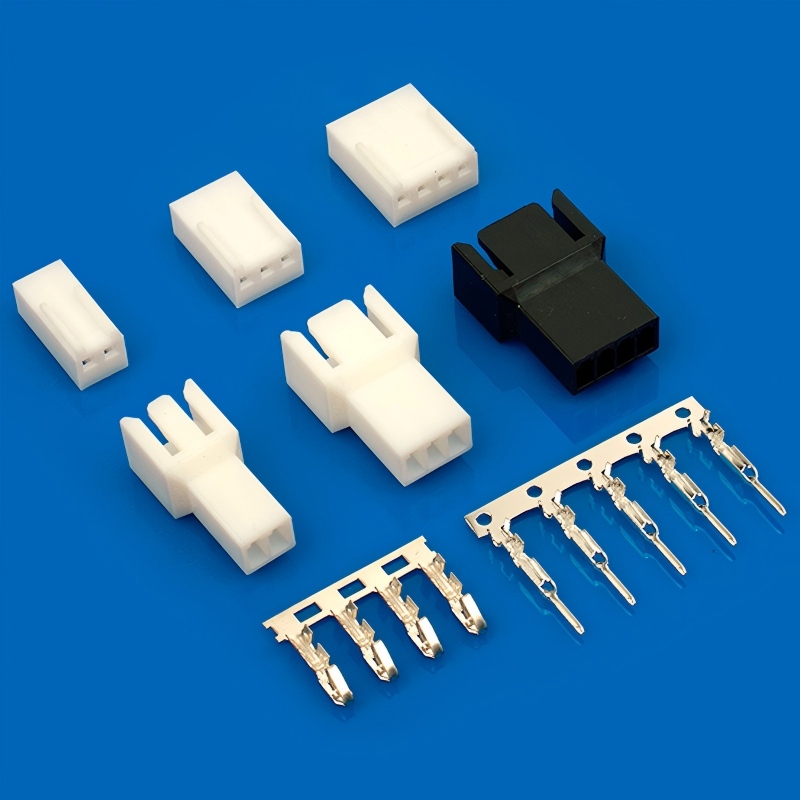 Standard series across all three families let a full control board interconnect be sourced from a single connector manufacturer. The A1001-H05 covers wire-to-board duty at 1.0 mm pitch, 1 A, and 50 V. The A2005-DWV03 handles wire-to-wire links at 2.0 mm pitch, 2 A, and 100 V. The 2-pin board-to-board connector rounds out stacked PCB designs. The working temperature range across the series is -25 to +105 degrees C, covering appliance and light industrial use. For a deeper look at the wire-to-board side, start with the wire-to-board connectors guide, and browse the full connector socket product category for mating options.
FAQ
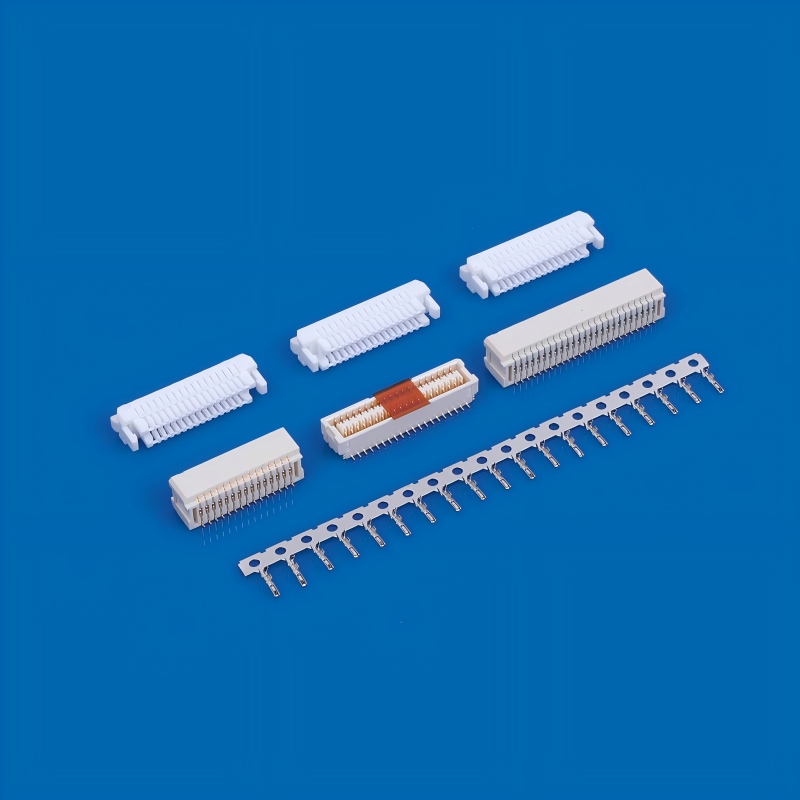 It depends on pitch and contact design. Small WTB series like the A1001 are rated at 1 A, and mid-size WTW like the A2005 at 2 A. Larger pitches carry more, so size the contact to the load, not the other way around.
Need a connector family matched to your board layout, current, and harness structure?
Send the pitch, ratings, and drawing to a connector manufacturer, and the engineering team will suggest a series plus samples for validation testing. OEM and ODM orders are welcome. Contact us